
Connect PagBank to Nevian
Connect PagBank so sales and payment changes reach Nevian and can be matched to the visit that brought the buyer.
What you need
Availability. This connection is not available in this version of the panel yet. Use this guide to prepare the account settings; continue only when its named integration and credential fields appear in your workspace. Do not send its events to Custom or another provider URL.
- A PagBank account with permission to configure notifications.
- An active Nevian plan and an owner, admin or member role. Viewers cannot connect integrations.
- Keep the checkout and Nevian tabs open side by side.
Steps
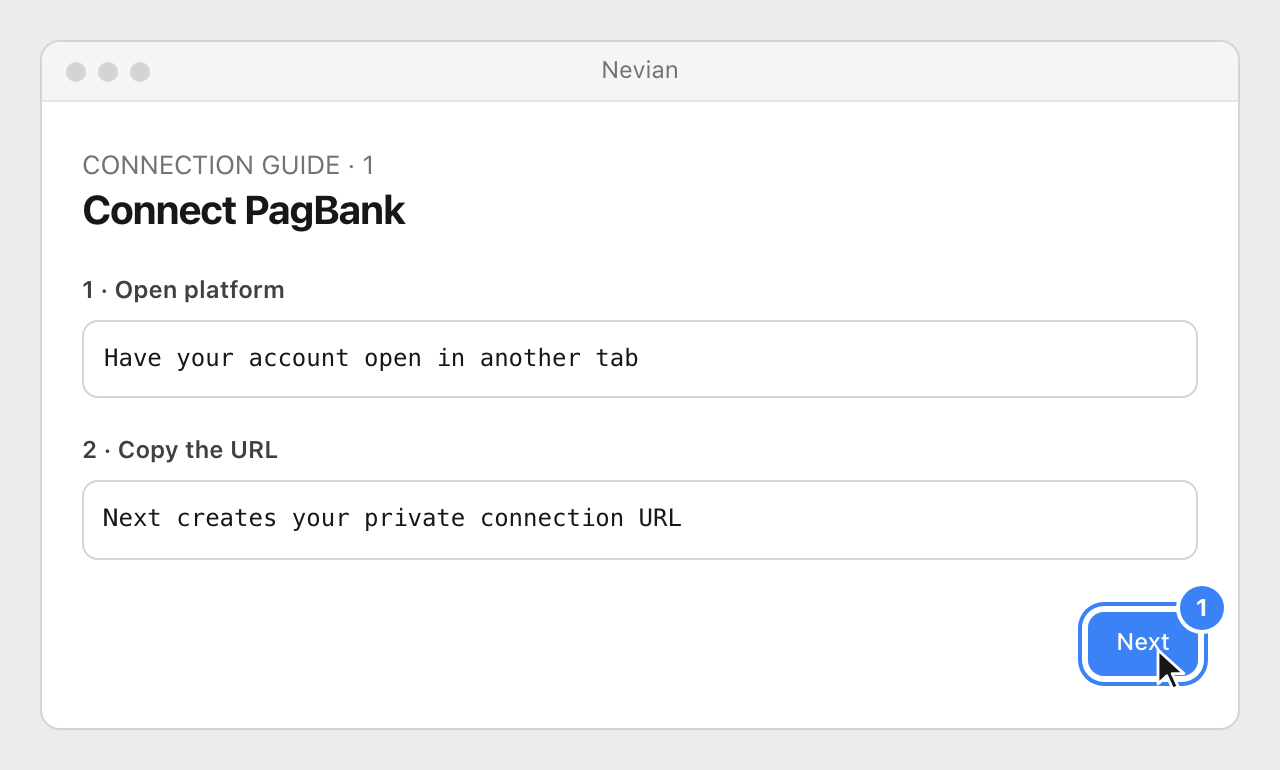
In Nevian, open Integrations → Add integration (Connect provider in an empty workspace), choose PagBank and click Next with the platform open in another tab.
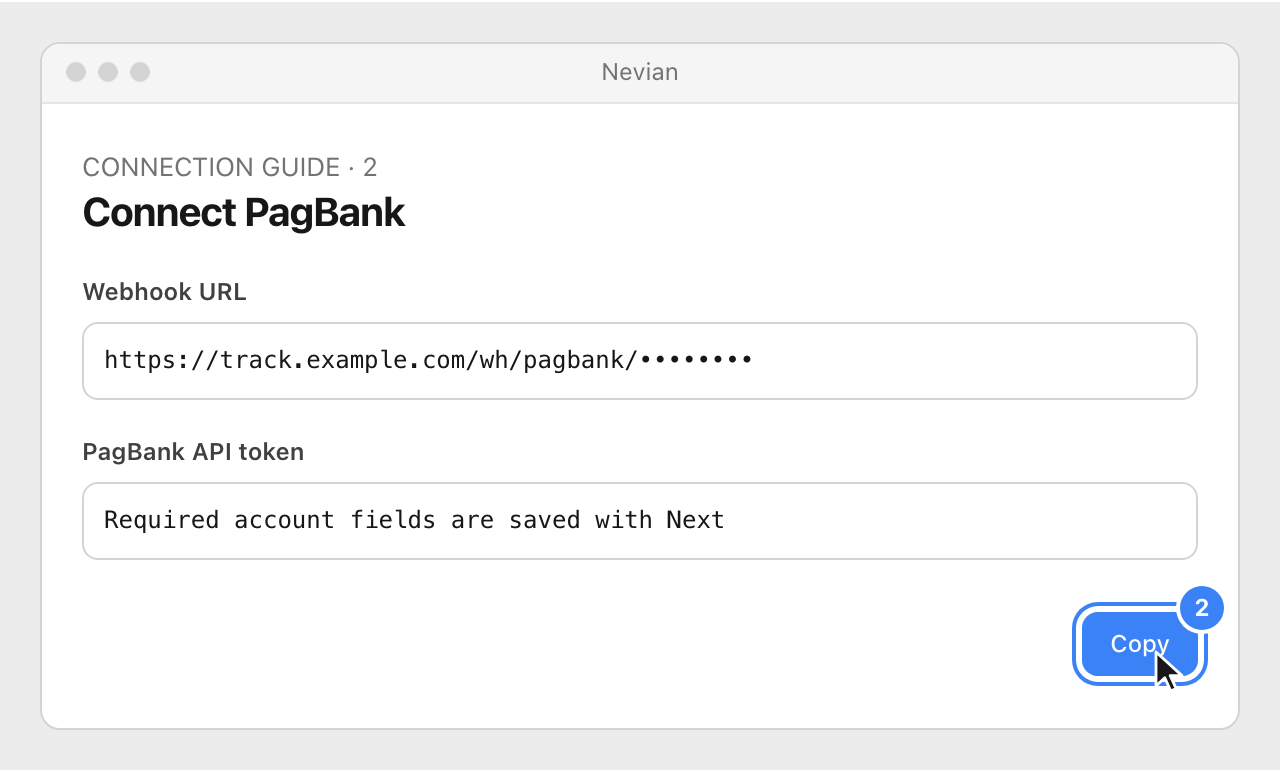
Copy the complete Webhook URL. Keep it private and leave this window open while you configure PagBank.
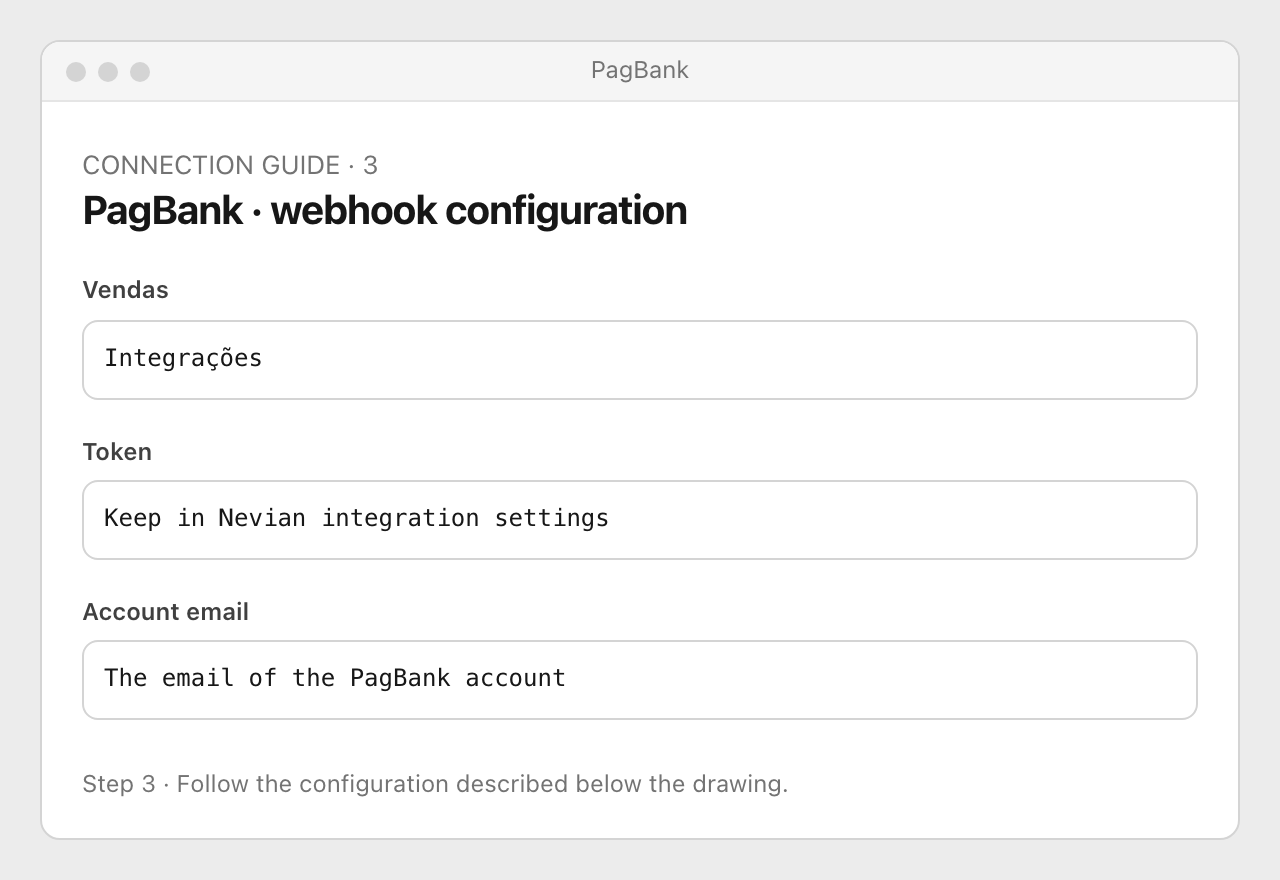
On the PagBank account website, open Vendas → Integrações → Gerar token. The token and the account email are required in Nevian when this connection becomes available.
For Orders API requests, put the URL in
notification_urls. For hosted checkouts, usepayment_notification_urls: checkoutnotification_urlsalone describes checkout status, not the payment.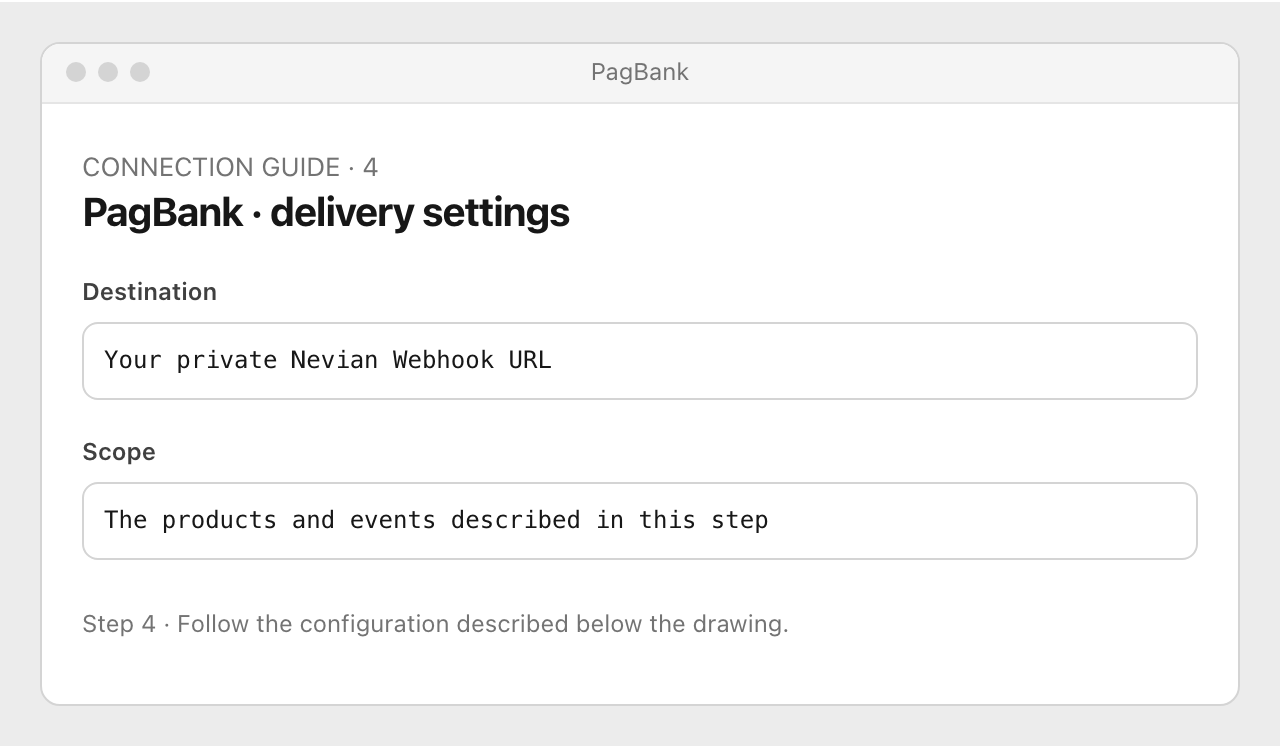
Return to Nevian, enter PagBank API token and click Next to save it before sending an event. Copy it from the same account and webhook you just configured.
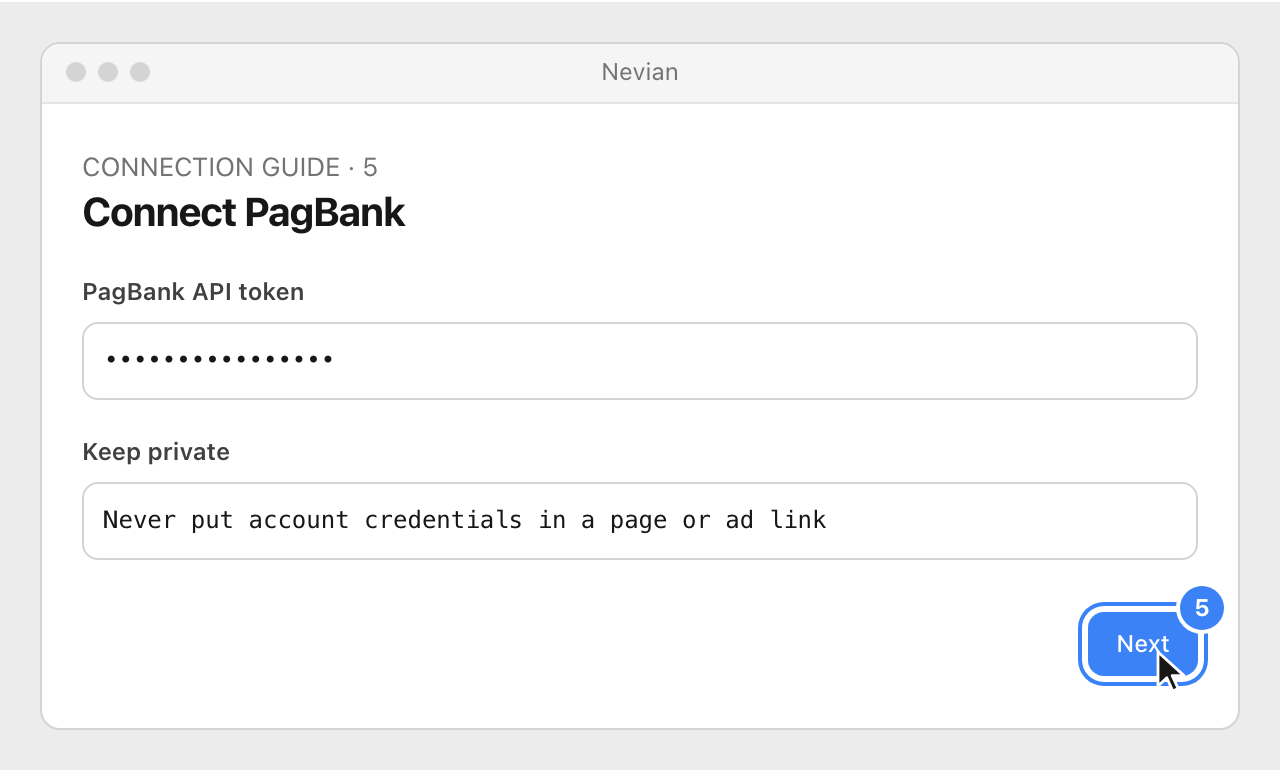
Use a sandbox order with its own sandbox token and a separate source. The prepared integration recognizes sandbox orders as tests; legacy notification-code-only sales are logged without creating a purchase. Back in Nevian, look for Connected, then click Done.
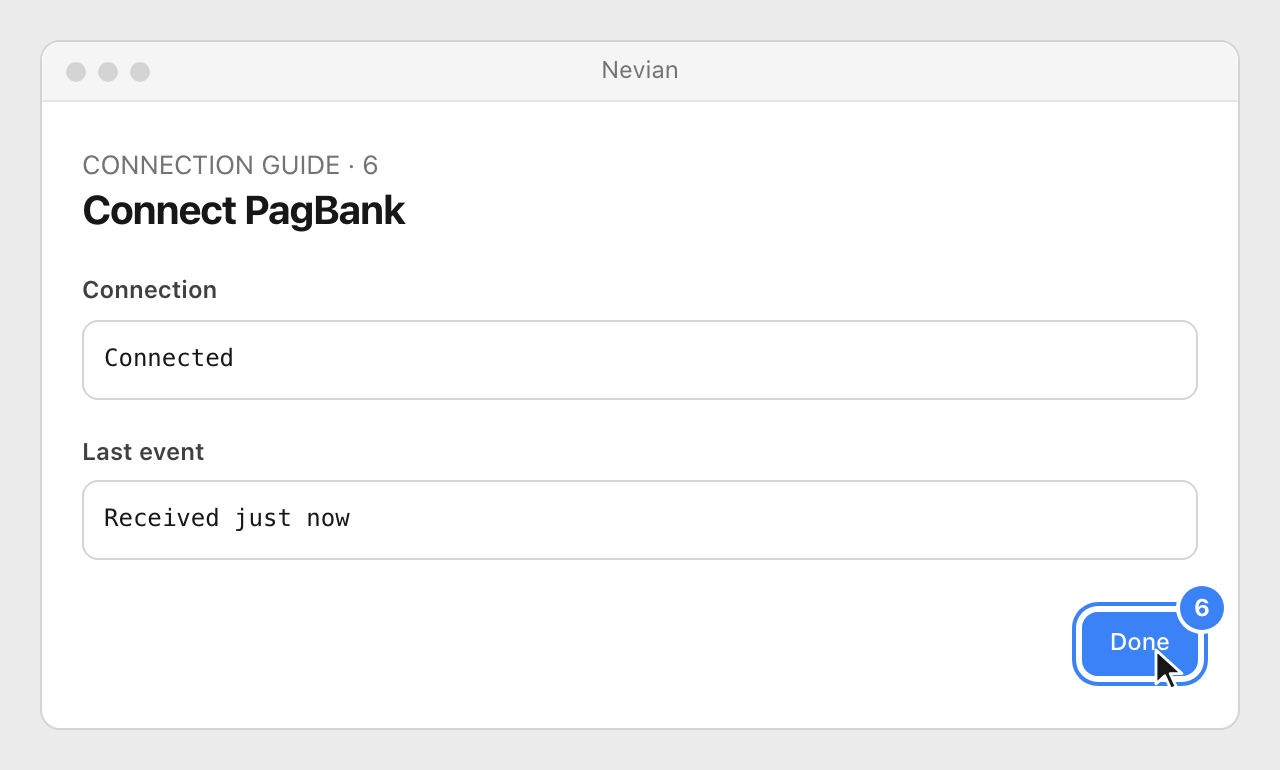
The account email is needed for the notification API. This guide does not create any new storage for personal data. Do not configure credentials until the matching fields are available in your workspace.
Check that it works
- Open Logs → Webhooks and confirm the provider, order ID, event and result. A delivered webhook can be logged without creating a sale when the event is informational.
- For orders, put the visit ID in
metadata.btkand use the same uniquereference_idfor order and charge. For hosted checkouts, use the visit ID orbtk=<click ID>inreference_id.
Problems
Waiting for the first event…
Check the complete URL, event subscriptions and product scope. If you rotated the integration key, replace the URL in the provider too.
The call was rejected
Read the reason in Logs → Webhooks. Check the secret when one is configured, then resend the original event after fixing the configuration.
No matching click
Check the click ID instructions above on a real ad visit. A provider test usually has no ad click; that alone does not mean delivery failed.
Still stuck? Write to [email protected].
Images are our own drawings and configuration diagrams, not screenshots. Use the current values from your account; the examples contain no live credentials.